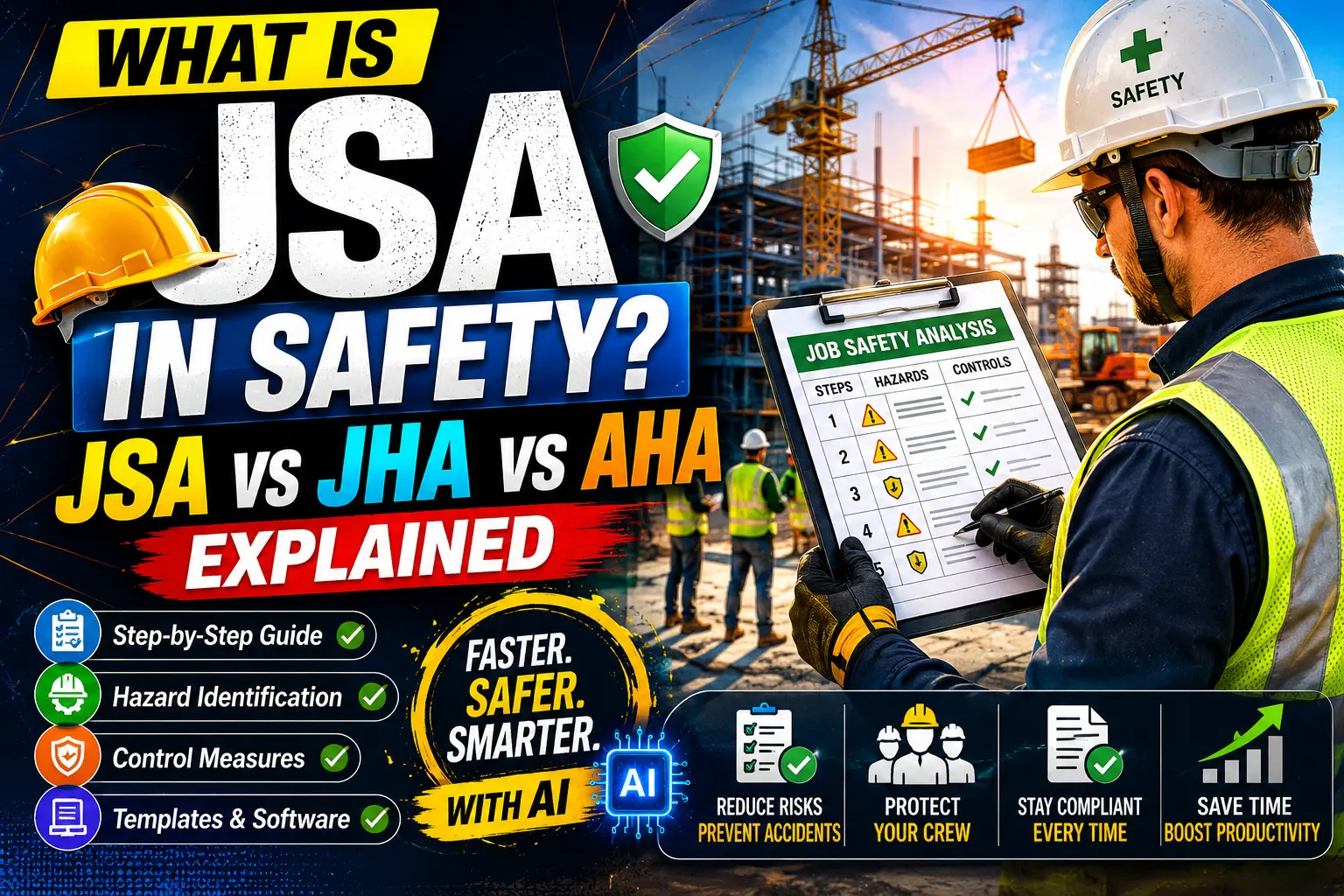
What is JSA (Job Safety Analysis)?
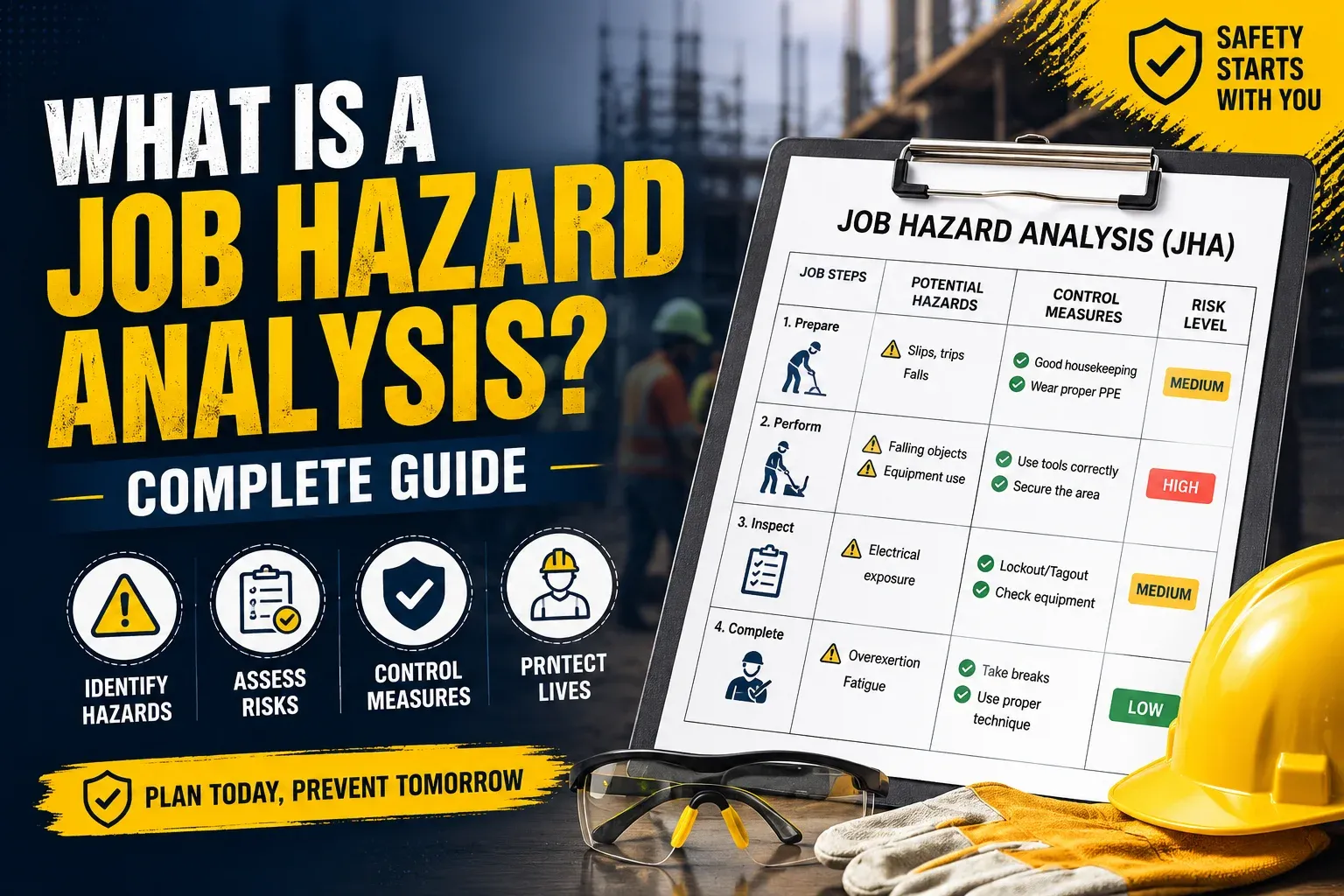
A Job Safety Analysis (JSA) is a formal, written process that identifies the hazards associated with specific job tasks and documents the actions required to control or eliminate those hazards before work begins. The JSA is one of the most widely used proactive safety tools in industries including construction, oil and gas, mining, utilities, and manufacturing.
The JSA focuses on the relationship between the worker, the task, the tools, and the work environment. By examining each element of a job in detail, safety officers and supervisors can anticipate problems rather than reacting to accidents after they occur.
JSA vs JHA Are They the Same?
In the vast majority of cases, yes — JSA and JHA refer to the same document. The terminology varies by industry, region, and company culture:
- JHA (Job Hazard Analysis): preferred term in OSHA literature and general construction
- JSA (Job Safety Analysis): preferred term in oil and gas, mining, and Australian/Canadian safety systems
- Task Hazard Analysis (THA): used in some utility and telecommunications companies
- AHA (Activity Hazard Analysis): specific to US Army Corps of Engineers (USACE) and federal construction projects
The structure and purpose are identical: break the task into steps, identify hazards at each step, and document controls. The name on the form does not change what it does.
JSA vs AHA Federal Projects Difference
If you work on USACE or other federal construction projects, your client will likely require an Activity Hazard Analysis (AHA) rather than a JSA. Here is how they differ:
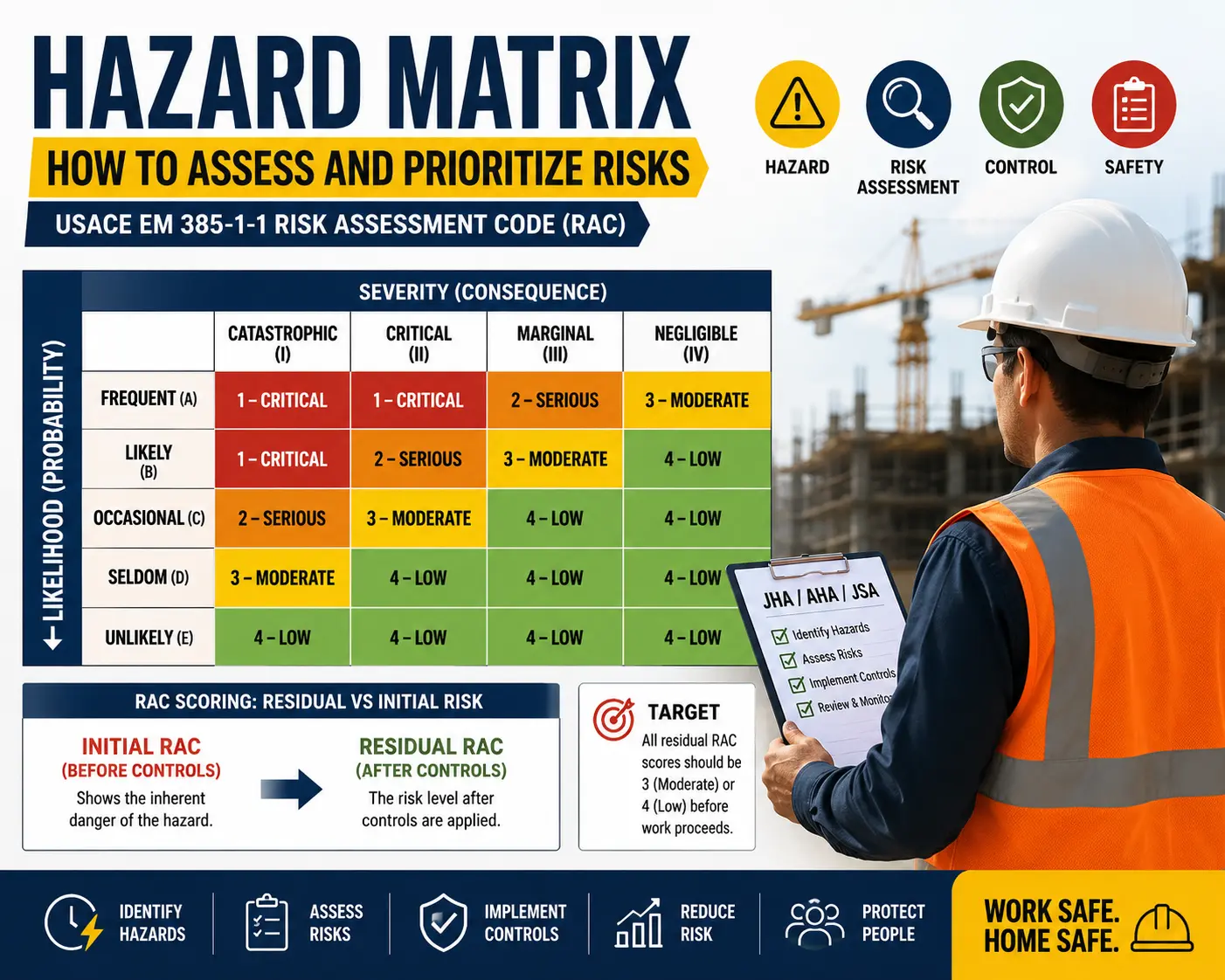
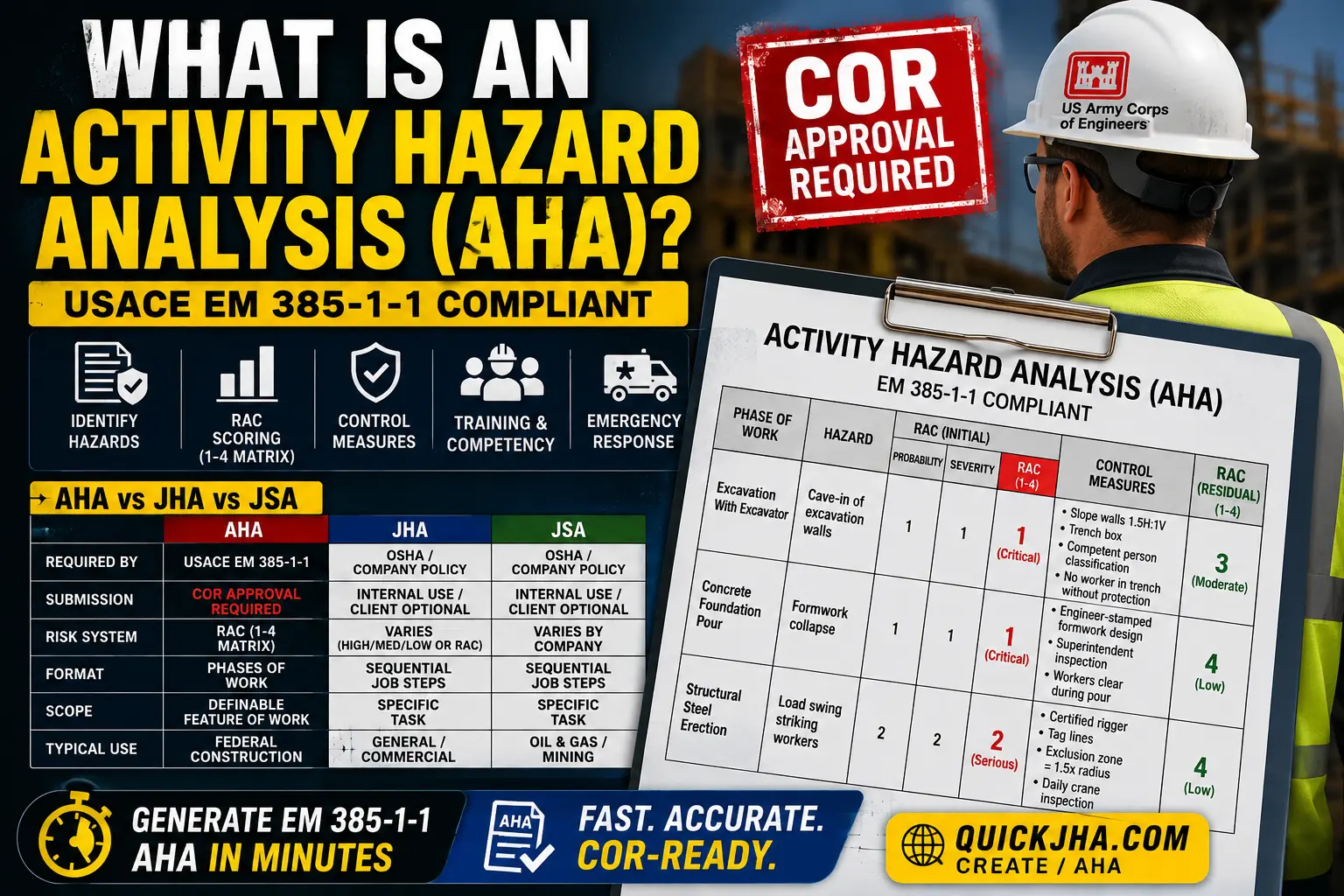
AHA is required under EM 385-1-1 (USACE Safety and Health Requirements Manual)
AHA must be submitted to and approved by the Contracting Officer Representative (COR) before work begins
AHA includes a formal Risk Assessment Code (RAC) scoring system using a specific matrix
AHA format includes 'phases of work' rather than simple job steps
JSA / JHA may or may not be submitted externally often used internally by the contractor
JSA Template: What Sections Does It Have?
A complete JSA form typically includes these sections:
Job / Task Title Specific and descriptive (e.g. 'Welding on structural steel at 6m height')
Date, Location, and Permit Number
Supervisor and Crew Names
Required PPE (checked list)
Tools and Equipment
Sequential Job Steps
Hazard Identification (per step)
Safe Work Practices / Control Measures (per step)
Emergency Contacts and Rescue Plan (for high-risk tasks)
Worker and Supervisor Signatures
How to Write a JSA for Construction Work
- Define the task precisely: 'Welding' is too broad. 'SMAW welding on a structural steel beam at 6 metres height' is specific enough to generate meaningful hazard identification.
- Walk the job site: Before writing the JSA, physically walk through the work area. Identify conditions that a desk-based review would miss: overhead power lines, wet surfaces, nearby traffic, poor lighting.
- Involve the workers: The workers performing the task should help write the JSA. They know the real hazards from experience. Their input dramatically improves quality.
- List every step in order: Do not combine steps. Keep each action separate so hazards can be identified precisely.
- For each step, ask the 'what if' questions: What if the worker slips? What if the equipment fails? What if conditions change (rain, wind, other trades nearby)?
- Write specific, actionable controls: Not 'use PPE' but 'wear a full-body harness with double-locking hook attached to a certified anchor point rated >22kN'.
- Get all signatures before work: Brief the crew, answer questions, and collect signatures. Post the JSA in a visible location at the work area.
Industries That Use JSA
Oil and Gas: JSA is the standard document on drilling rigs, pipeline work, and refineries. Often called a 'Permit to Work' JSA for high-risk activities.
Construction: Used for all high-risk tasks including working at height, excavation, demolition, and confined space entry.
Mining: JSA is mandatory before each shift for tasks involving heavy equipment, blasting, or underground work.
Utilities: Electrical utilities require JSA / task briefings for all work on or near energised equipment.
Manufacturing: Applied to maintenance tasks, machine changeovers, and any non-routine work with elevated risk.
Transportation and Warehousing: Used for forklift operations, loading dock activities, and hazardous materials handling.
JSA Software: Why Manual Templates Are Outdated
A blank JSA template downloaded from the internet is better than nothing but it is far from optimal. Here is why safety professionals are moving away from manual templates:
Time: A thorough manual JSA takes 45–90 minutes per task. Crews doing five tasks per day cannot maintain that pace.
Inconsistency: Different supervisors produce vastly different quality documents. AI produces consistent, professional output every time.
Compliance gaps: A generic template does not know which OSHA standard applies to your task and location.
No branding: Generic forms do not show your company identity, which matters for client submissions and corporate audits.
No digital archive: Paper-based JSAs are lost, damaged, or simply not filed. Digital documents are searchable and permanently accessible.