How to Inspect a Construction Site for Safety: 10-Step Guide
A complete guide to construction site safety inspections including an OSHA 29 CFR 1926 checklist, a 10-step inspection process, common violations, and how JHA documentation supports pre-inspection planning.
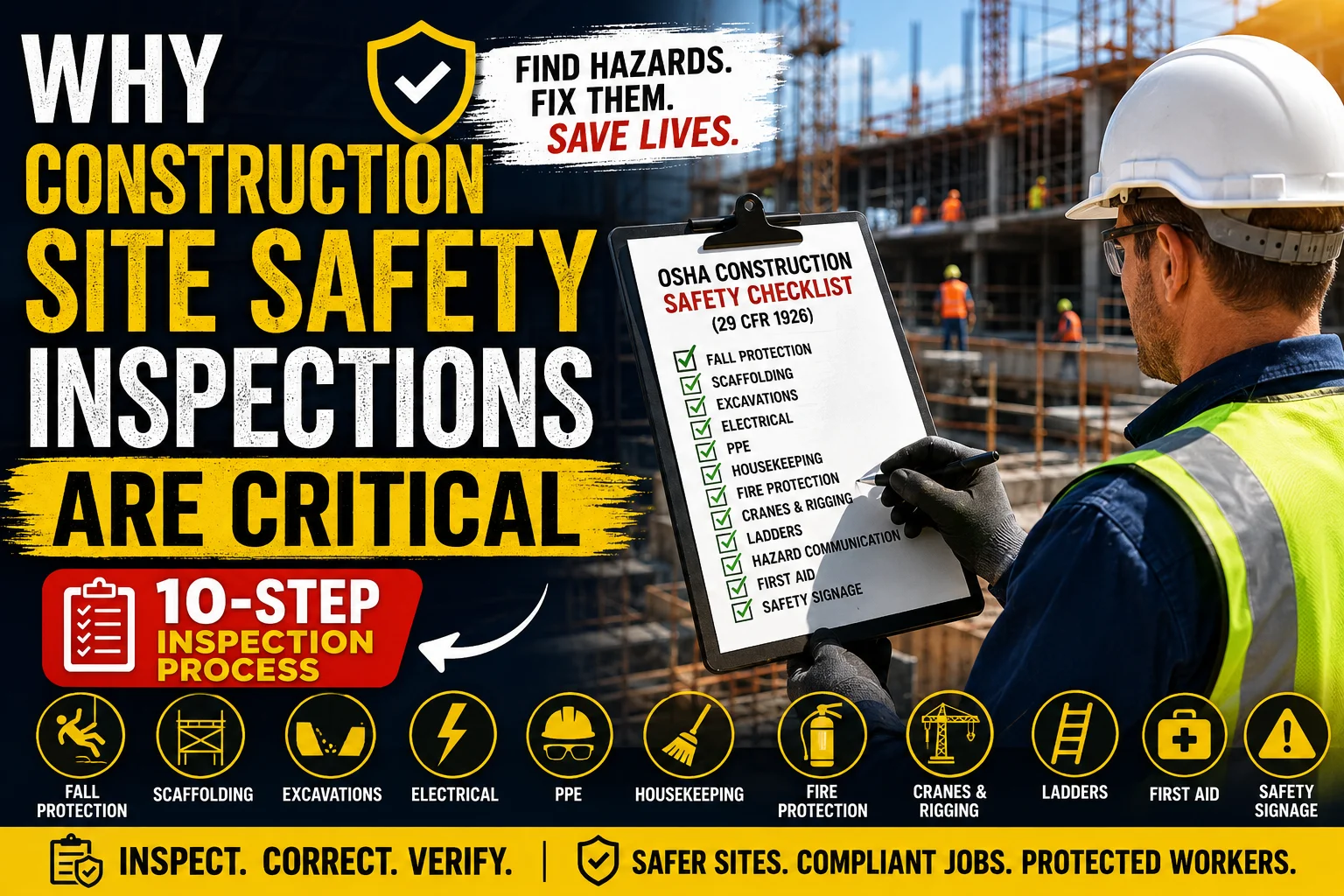
Why Construction Site Safety Inspections Are Critical
Construction is consistently ranked among the most dangerous industries in the world. OSHA reports that construction accounted for one in five worker fatalities in private industry in the most recent reporting year. The leading causes of falls, struck-by, caught-in-between, and electrocution (the 'Fatal Four') are all preventable through effective site inspections and pre-task hazard analysis.
A safety inspection is not a bureaucratic exercise. It is a systematic process of identifying hazards on the active job site, verifying that controls are in place and working, and taking corrective action before someone gets hurt. Regular inspections also demonstrate due diligence to OSHA, your client, and your insurer.
OSHA Construction Safety Checklist (29 CFR 1926)
Use this checklist as a minimum baseline for every construction site inspection:
- Fall Protection (1926.502): Guardrails, personal fall arrest systems, safety nets; 6ft threshold for construction
- Scaffolding (1926.451): Guardrails on all platforms >10 ft, scaffold frames pinned, safe access ladders
- Excavations (1926.652): Sloping, shoring, or trench boxes in place; no workers in unprotected trenches
- Electrical (1926.405): GFCI protection for all 120V tools; no damaged cords; lockout/tagout programme
- Personal Protective Equipment (1926.95): Hard hats, safety glasses, high-vis vests, and safety boots worn by all workers
- Housekeeping (1926.25): Work areas clear of debris, trip hazards, and waste materials
- Fire Protection (1926.150): Fire extinguishers accessible and inspected; no excessive fuel storage near ignition sources
- Cranes and Rigging (1926.1400): Daily crane inspection log completed; rigging equipment rated for loads
- Ladders (1926.1053): Ladders in good condition; extended 3ft above landing; secured top and bottom
- Hazard Communication (1926.59): SDS available for all chemicals; containers labelled; workers trained
- First Aid (1926.50): First aid kit accessible and stocked; nearest medical facility posted
- Safety Signage: Warning signs, barricades, and exclusion zones are correctly posted and maintained
10-Step Construction Site Inspection Process
- Plan the inspection: Review the project scope, current activities, JHAs on file, and any previous inspection findings. Know what you are looking for before you go.
- Notify (or do not notify): For compliance inspections, unannounced visits give a true picture of site conditions. For mentoring inspections, notify the supervisor so they can accompany you and learn.
- Walk the perimeter first: Start at the site boundary. Look for unauthorised access points, proximity to public areas, overhead hazards (power lines), and site signage.
- Inspect each active work area: Move systematically through the site. Do not rush. For each area, check: fall protection, PPE, housekeeping, equipment, and stored materials.
- Observe workers in action: Watching how workers actually perform tasks reveals behavioural hazards that a static inspection misses. Are they using equipment correctly? Are they following JHA controls?
- Check documentation at the site: Are JHAs posted? Is the daily crane inspection log complete? Are Safety Data Sheets accessible? Are workers' certifications on file?
- Talk to the crew: Ask workers about hazards they have noticed. They often know about problems before management does. This also shows workers that safety is valued, not just enforced.
- Photograph every finding: Document all hazards with photos linked to your inspection report. Photos are essential for corrective action tracking and OSHA defence.
- Issue findings and corrective actions: Every finding must have a corrective action with a named responsible person and a completion deadline. Critical findings (imminent danger) must be corrected immediately.
- Follow up: Re-inspect corrective actions before the deadline. Safety inspections have zero value if findings are not corrected and verified.
Common Safety Violations Found on Construction Sites
- Fall protection not installed or removed without reinstatement: most common OSHA citation
- Workers wearing PPE incorrectly: hard hats on backwards, harnesses not adjusted, no safety glasses
- Damaged or unauthorised extension cords: particularly around wet areas
- Unsecured excavations: workers in trenches without sloping, shoring, or a trench box
- Scaffold frames not pinned or cross-braced: platform loads exceed design rating
- No JHA or safety documentation at the point of work: supervisors cannot demonstrate compliance
- Blocked emergency exits and first aid access: materials stacked against exits
- Uninspected cranes and rigging: daily logs missing or not completed before the first lift
How to Document Safety Inspection Findings
Good documentation separates a professional safety programme from a compliance exercise. Every inspection should produce a written report that includes:
- Date, time, inspector name, and areas inspected
- A numbered list of findings with description, location, and photo reference
- Risk rating for each finding (Critical / Serious / Moderate / Low)
- Corrective action required, responsible person, and completion deadline
- Follow-up date and signature confirming that corrective action is complete
Role of JHA in Pre-Inspection Planning
Before you walk the site, review every active JHA on file. The JHA tells you exactly what hazards should be controlled for each task currently underway. During your inspection, verify that every control measure documented in the JHA is actually in place. If the JHA says guardrails must be installed at the slab edge and you arrive to find no guardrails, you have found a compliance gap before someone falls.
A strong JHA programme dramatically improves inspection effectiveness by establishing a documented standard against which actual conditions can be measured. Without JHAs, an inspector is working from general knowledge. With JHAs, they work from a task-specific safety plan that was agreed to and signed before work began.
Create comprehensive JHAs for all your tasks at QuickJHA
Recent Posts
JHA, AHA & JSA Compliance Checklist: What Auditors Check
A field-ready compliance checklist for JHAs, AHAs, and JSAs, covering US, Australian, Canadian, UK, New Zealand, and UAE standards, plus what auditors flag. Primary Keyword: checklist for job safety analysis jsa consists of
Sep 22, 2026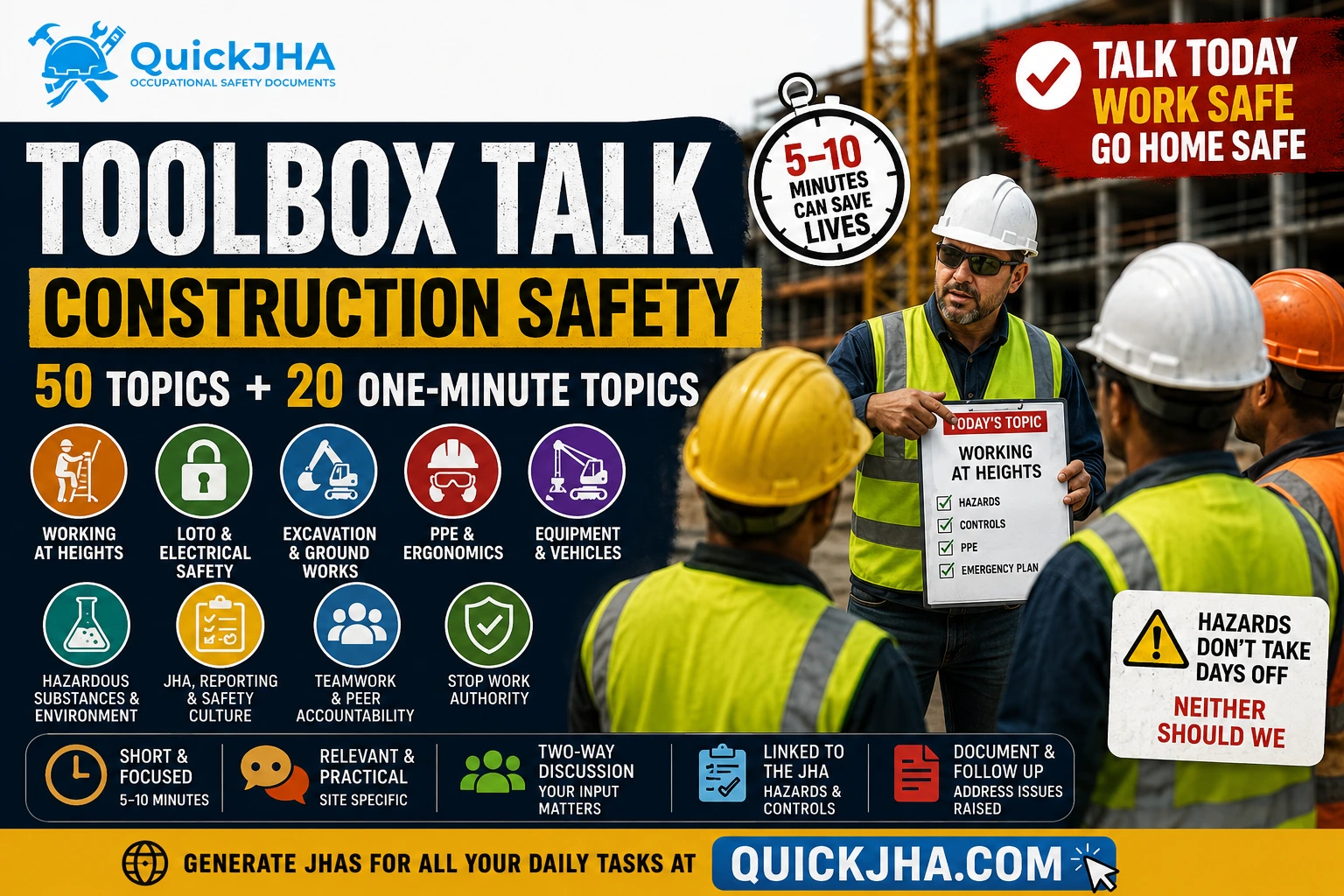
50 Toolbox Talk Topics for Construction Safety Meetings (2026)
A complete list of 50 toolbox talk topics for construction safety meetings, 20 quick one-minute safety topics, tips for running effective talks, and how to link your toolbox talk programme to your JHA system.
Jul 06, 2026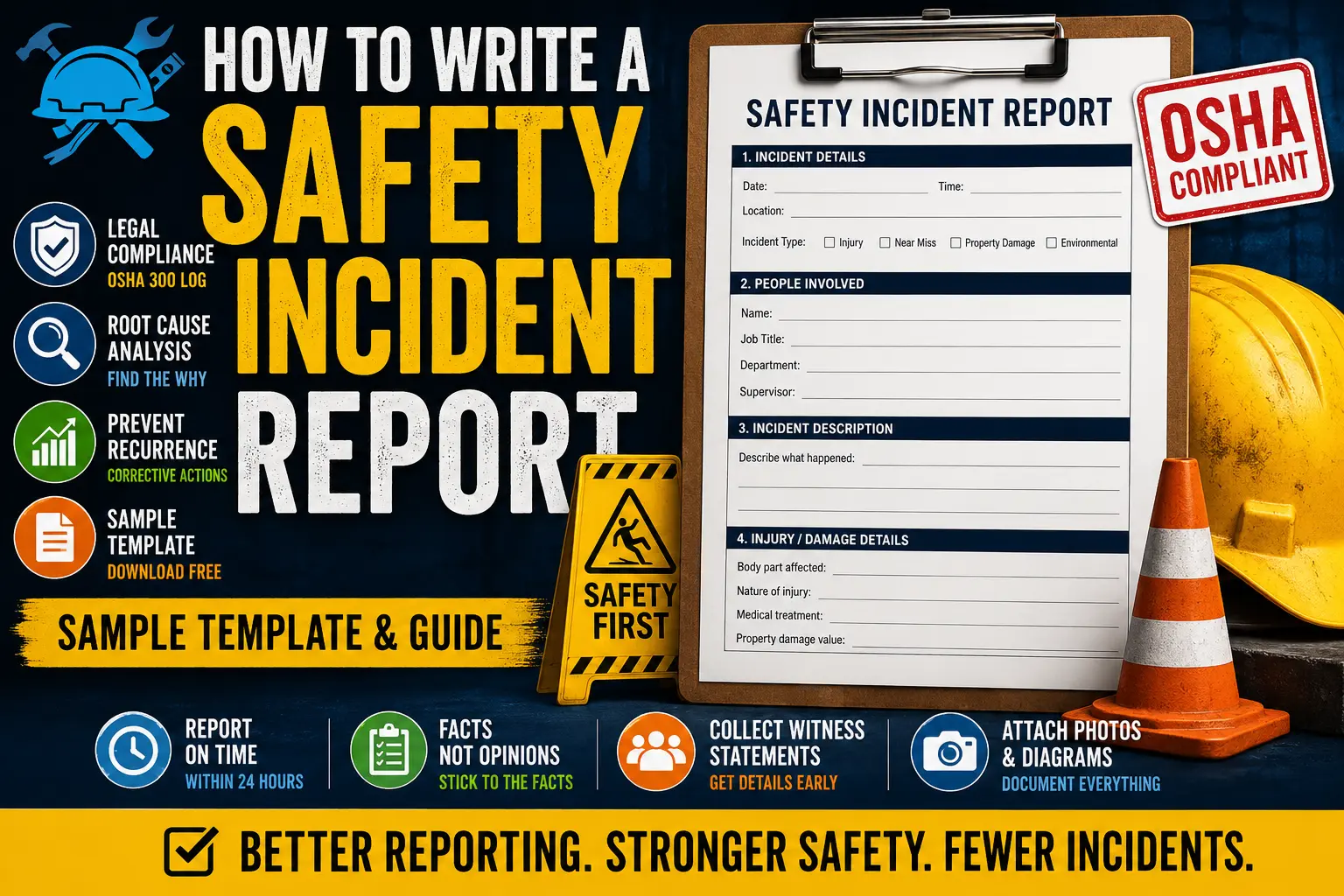
How to Write an Incident Report + Free Sample Template
A step-by-step guide to writing a safety incident report that meets OSHA recordkeeping requirements includes a free sample template, common mistakes to avoid, and how JHAs help prevent future incidents.
Jul 03, 2026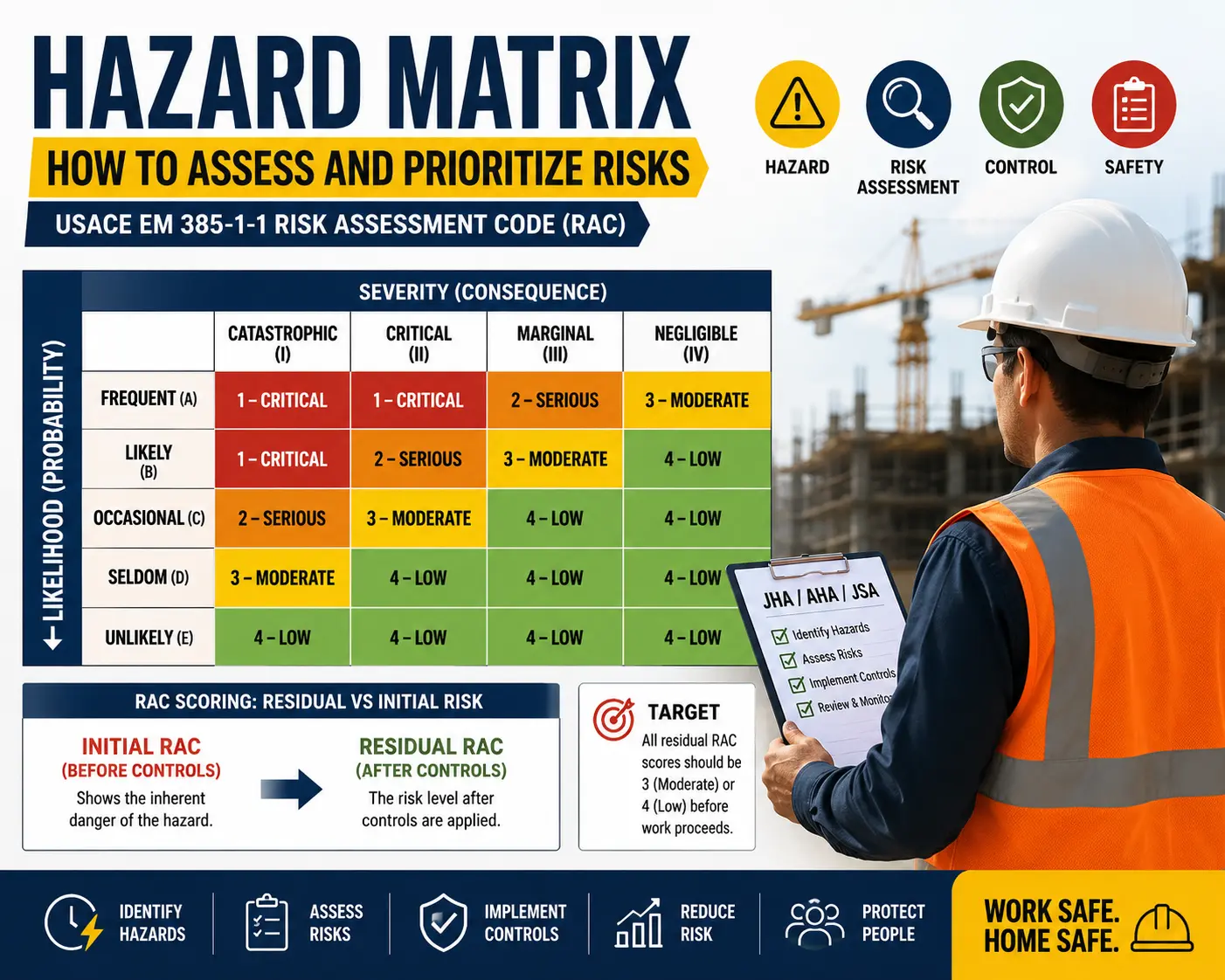
Hazard Matrix: How to Use a Risk Assessment Matrix in Safety
Understand how a hazard matrix works, how to read likelihood × severity risk ratings, what RAC scores mean, and how to apply a risk assessment matrix correctly inside JHA and AHA documents.
Jun 30, 2026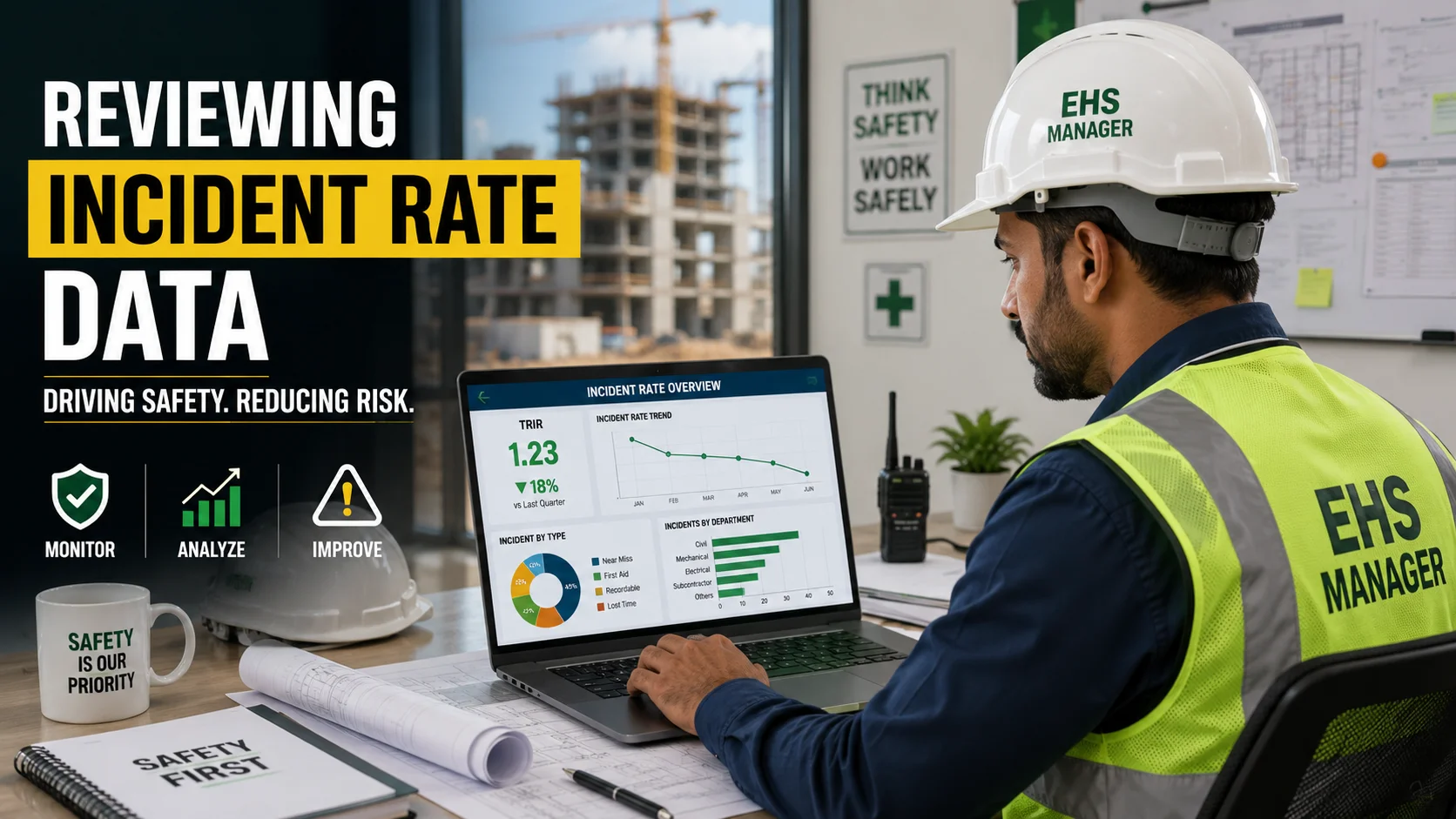
How to Calculate TRIR: Step-by-Step Guide with Formula & Examples
Learn what TRIR means, the exact formula for calculating Total Recordable Incident Rate, worked examples, what a good TRIR score looks like, and how JHA documentation helps you reduce it.
Jun 24, 2026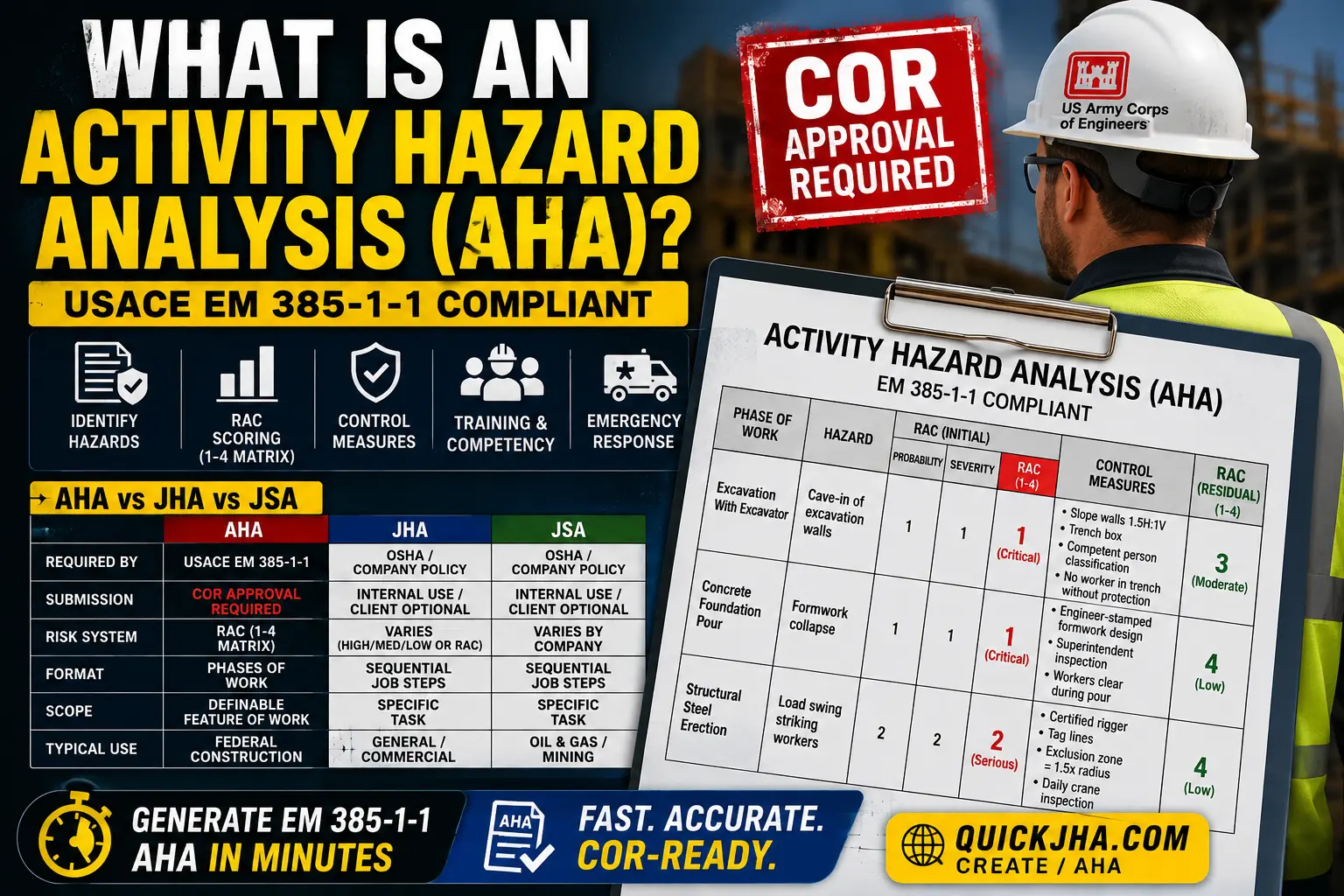
Activity Hazard Analysis (AHA) Guide for EM 385-1-1
The complete guide to Activity Hazard Analysis (AHA) for USACE and federal contractors. Understand EM 385-1-1 requirements, AHA format, real construction examples, and how to generate a compliant AHA in minutes.
Jun 22, 2026Generate Safety Documents in Seconds
Create OSHA-compliant JHAs, AHAs, and JSAs instantly. Professional formatting, zero effort, built for safety professionals.