Hazard Matrix: How to Use a Risk Assessment Matrix in Safety
Understand how a hazard matrix works, how to read likelihood × severity risk ratings, what RAC scores mean, and how to apply a risk assessment matrix correctly inside JHA and AHA documents.
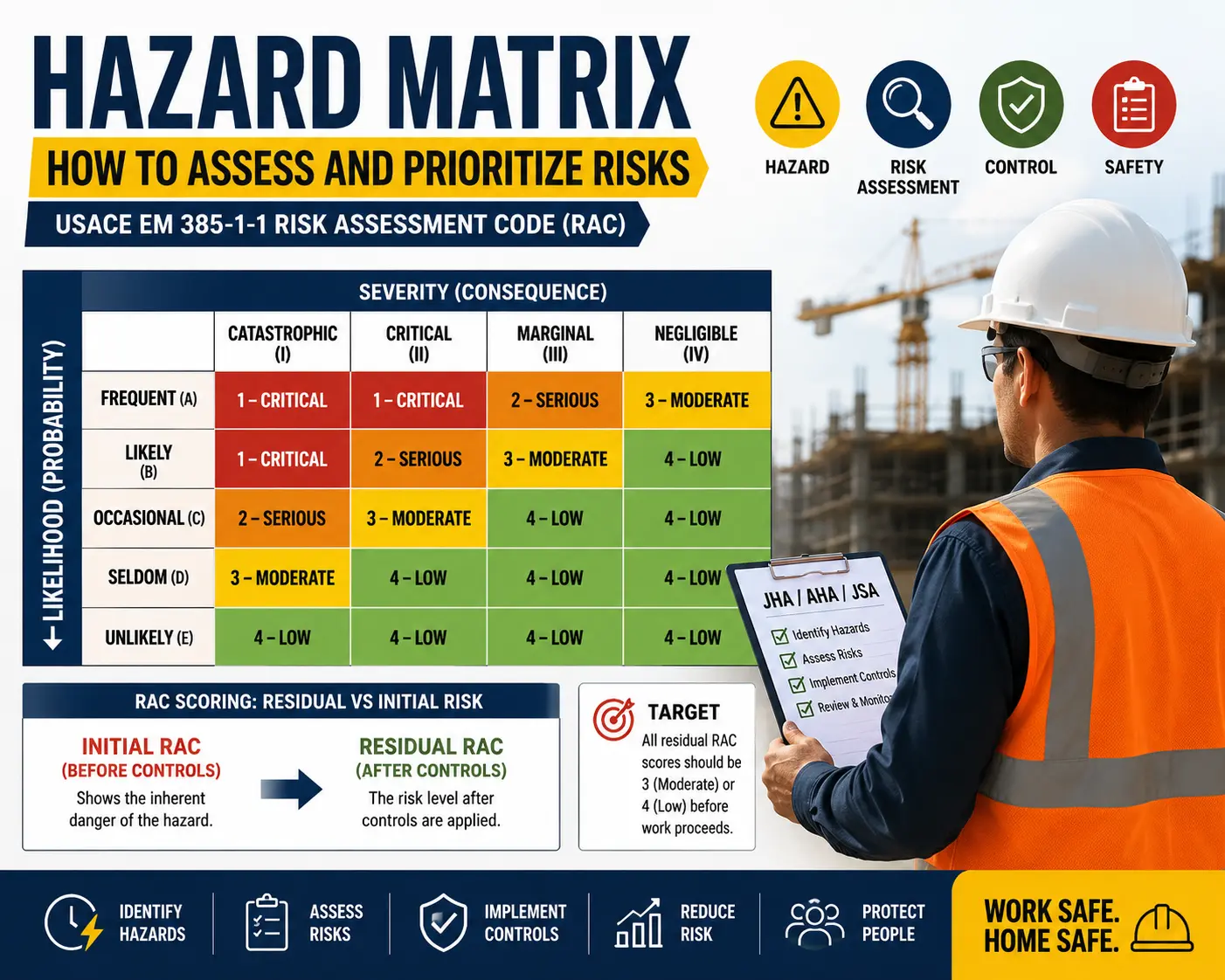
What is a Hazard Matrix?
A hazard matrix also called a risk assessment matrix, risk matrix, or composite risk assessment is a visual tool used to evaluate and prioritise risks based on two factors: the likelihood (probability) that a hazard will result in harm, and the severity (consequence) of that harm if it occurs.
The matrix produces a combined risk rating that helps safety professionals decide which hazards to address first, whether existing controls are adequate, and whether a task is safe to proceed. It is used inside JHA, AHA, JSA, and standalone risk assessment documents.
How to Read a Risk Assessment Matrix (Likelihood × Severity)
The standard risk matrix works as follows:
- Likelihood (Probability): How likely is it that this hazard will actually cause harm? Rated from Improbable (almost never) to Frequent (regularly expected).
- Severity (Consequence): If the hazard results in harm, how bad will it be? Rated from Negligible (minor first aid) to Catastrophic (death or permanent disability).
- Risk Rating: Likelihood × Severity = Combined risk level (Critical, Serious, Moderate, or Low).
USACE EM 385-1-1 Risk Assessment Code (RAC) Matrix
|
Probability ↓ / Severity → |
Catastrophic (I) |
Critical (II) |
Marginal (III) |
Negligible (IV) |
|
Frequent (A) |
1 –
Critical |
1 –
Critical |
2 –
Serious |
3 –
Moderate |
|
Likely (B) |
1 –
Critical |
2 –
Serious |
3 –
Moderate |
4 – Low |
|
Occasional (C) |
2 –
Serious |
3 –
Moderate |
4 – Low |
4 – Low |
|
Seldom (D) |
3 –
Moderate |
4 – Low |
4 – Low |
4 – Low |
|
Unlikely (E) |
4 – Low |
4 – Low |
4 – Low |
4 – Low |
RAC Scoring: Residual vs Initial Risk
Every JHA and AHA should include two RAC scores for each hazard:
- Initial RAC (Before Controls): The risk level if no controls were in place. This shows the inherent danger of the hazard.
- Residual RAC (After Controls): The risk level once all documented control measures are applied. This is the risk your workers will actually face.
- Target: All residual RAC scores should be 3 (Moderate) or 4 (Low) before work proceeds. A residual RAC of 1 (Critical) means your controls are insufficient and work should not start.
Hazard Matrix Example for Construction Tasks
|
Task / Hazard |
Likelihood |
Severity |
Initial RAC |
Residual RAC (with controls) |
|
Working at height — fall |
Occasional
(C) |
Catastrophic
(I) |
2 –
Serious |
4 – Low |
|
Excavation — cave-in |
Seldom
(D) |
Catastrophic
(I) |
3 –
Moderate |
4 – Low |
|
Electrical — arc flash |
Seldom
(D) |
Critical
(II) |
4 – Low |
4 – Low |
|
Manual handling — strain |
Likely
(B) |
Marginal
(III) |
3 –
Moderate |
4 – Low |
OSHA vs EM 385-1-1 Risk Rating Systems
- OSHA does not mandate a specific risk matrix format. Companies may use High/Medium/Low, numerical scales, colour-coded systems, or RAC codes.
- EM 385-1-1 requires the specific RAC matrix shown above (Probability A–E × Severity I–IV). RAC 1 = Critical, RAC 2 = Serious, RAC 3 = Moderate, RAC 4 = Low.
- ISO 45001 recommends a risk matrix approach but does not prescribe a specific format companies define their own scales.
- AS/NZS 4360 (Australia/NZ) uses a 5×5 matrix with Consequence ratings from Insignificant to Catastrophic and Likelihood from Rare to Almost Certain.
Using Hazard Matrix Inside a JHA or AHA Document
In QuickJHA-generated documents, the RAC matrix is applied automatically. For each job step and associated hazard, the AI assigns an initial RAC score based on the hazard type and task context, then reassigns a residual RAC after documenting appropriate control measures. This ensures every document is internally consistent and demonstrates that controls are proportionate to the hazard level.
See how RAC scoring works in a live JHA at quickjha.com

Recent Posts
JHA, AHA & JSA Compliance Checklist: What Auditors Check
A field-ready compliance checklist for JHAs, AHAs, and JSAs, covering US, Australian, Canadian, UK, New Zealand, and UAE standards, plus what auditors flag. Primary Keyword: checklist for job safety analysis jsa consists of
Sep 22, 2026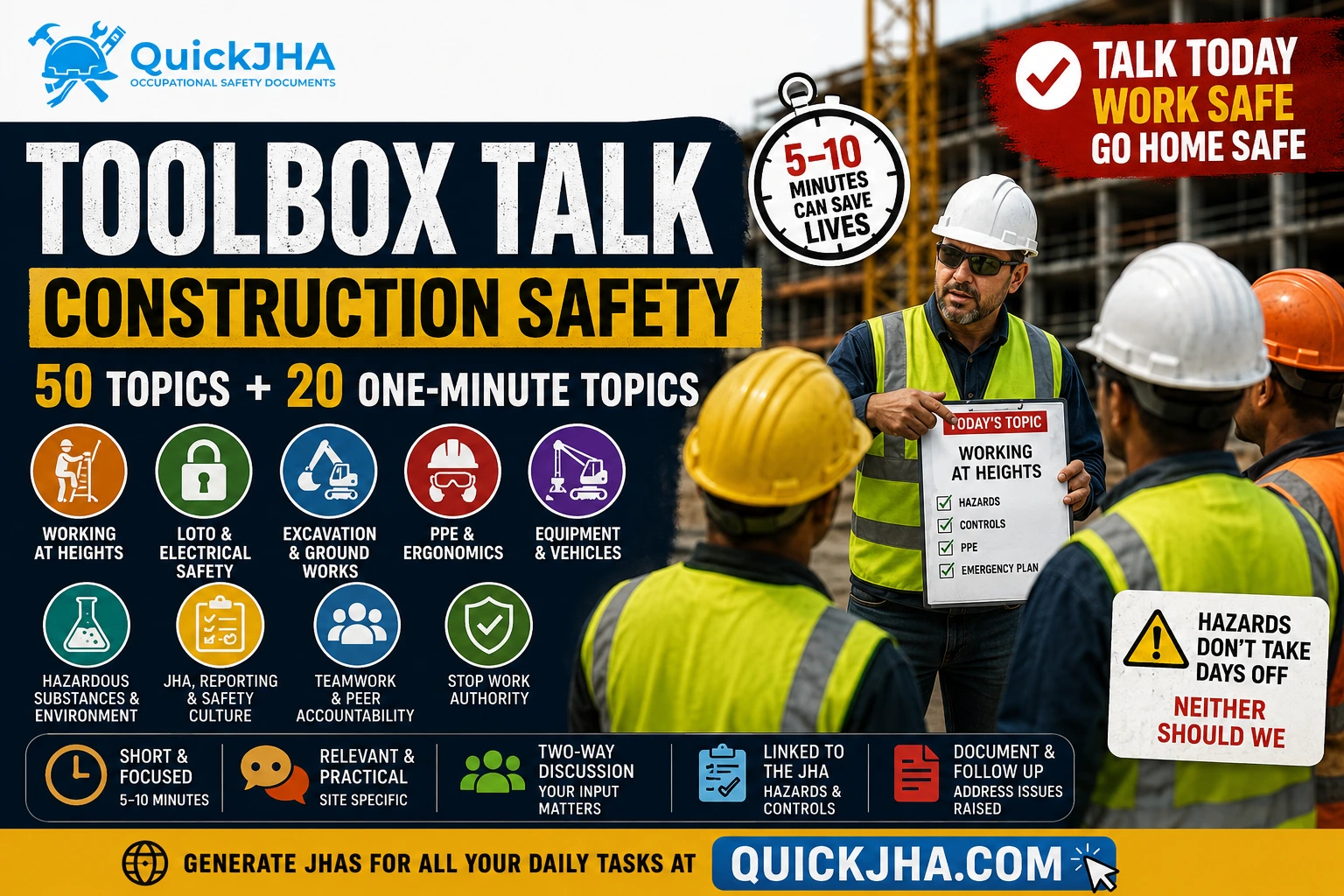
50 Toolbox Talk Topics for Construction Safety Meetings (2026)
A complete list of 50 toolbox talk topics for construction safety meetings, 20 quick one-minute safety topics, tips for running effective talks, and how to link your toolbox talk programme to your JHA system.
Jul 06, 2026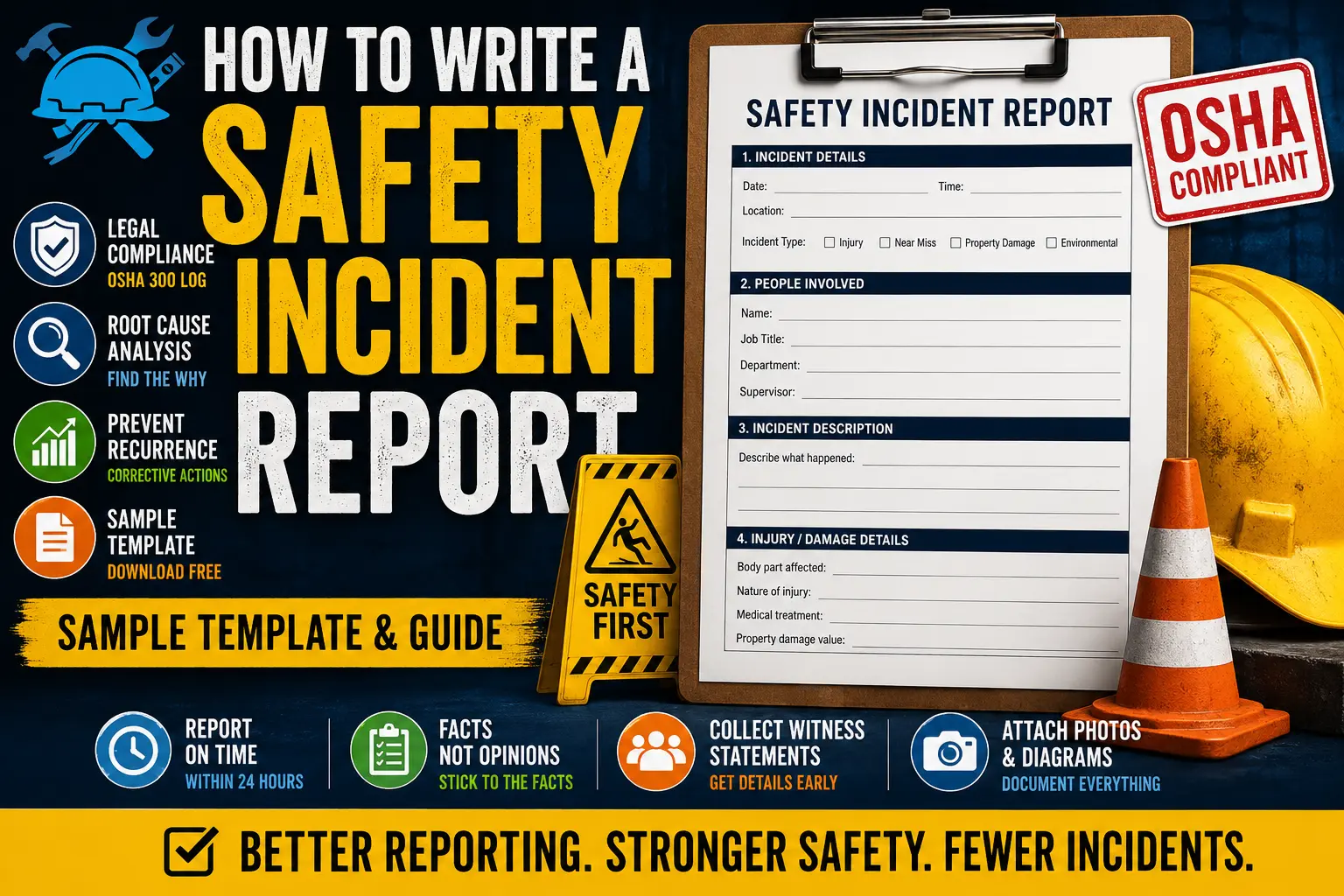
How to Write an Incident Report + Free Sample Template
A step-by-step guide to writing a safety incident report that meets OSHA recordkeeping requirements includes a free sample template, common mistakes to avoid, and how JHAs help prevent future incidents.
Jul 03, 2026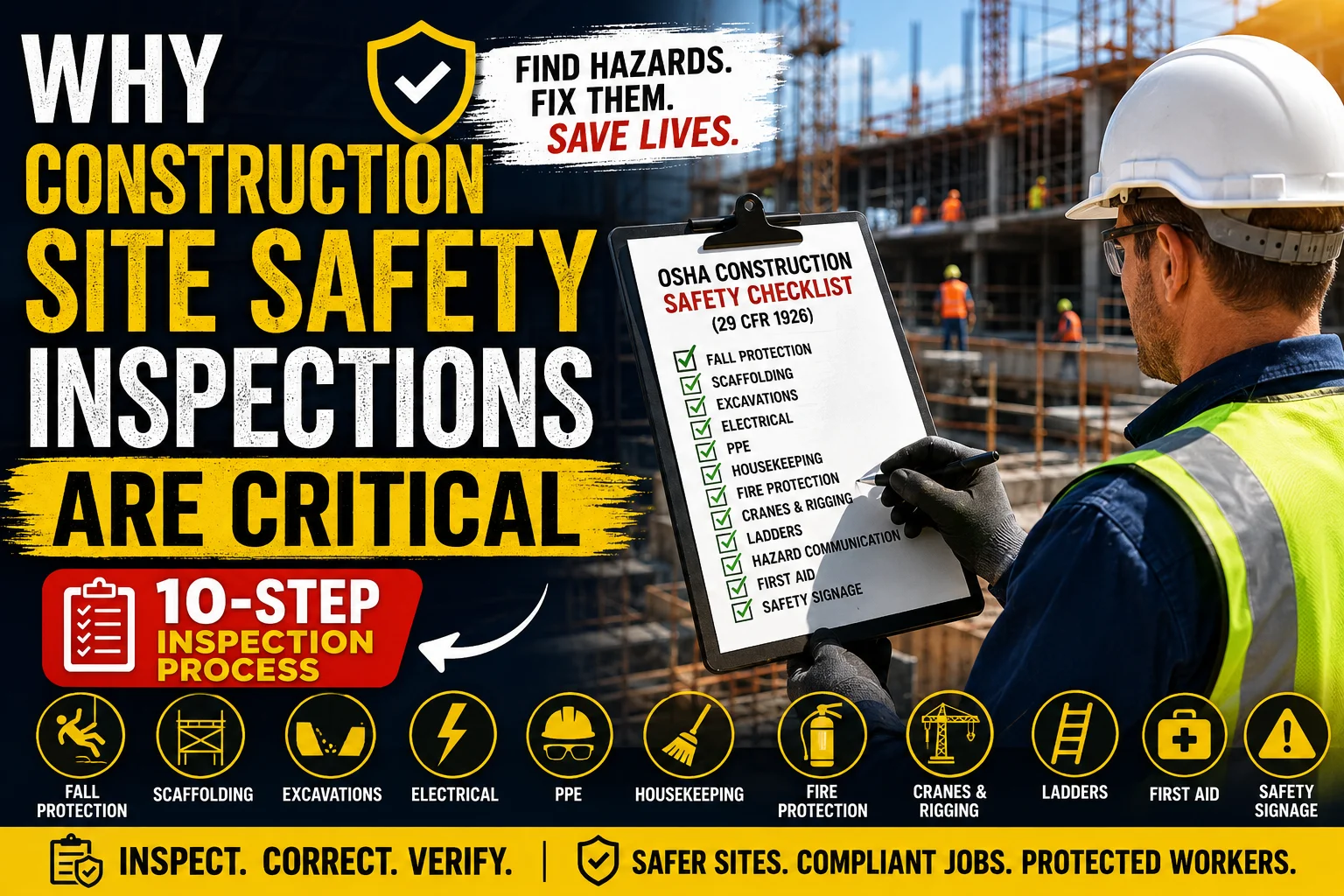
How to Inspect a Construction Site for Safety: 10-Step Guide
A complete guide to construction site safety inspections including an OSHA 29 CFR 1926 checklist, a 10-step inspection process, common violations, and how JHA documentation supports pre-inspection planning.
Jun 25, 2026
How to Calculate TRIR: Step-by-Step Guide with Formula & Examples
Learn what TRIR means, the exact formula for calculating Total Recordable Incident Rate, worked examples, what a good TRIR score looks like, and how JHA documentation helps you reduce it.
Jun 24, 2026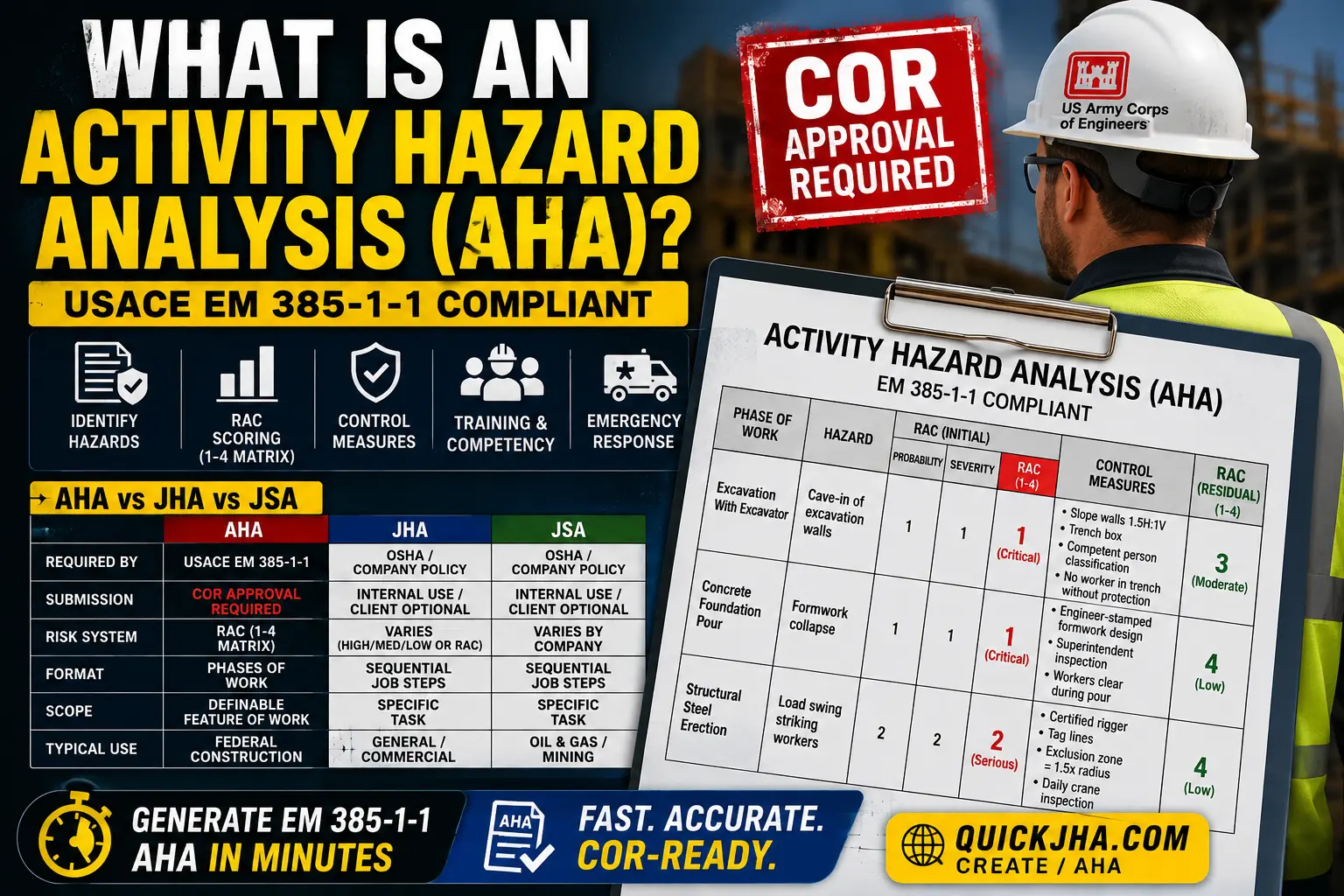
Activity Hazard Analysis (AHA) Guide for EM 385-1-1
The complete guide to Activity Hazard Analysis (AHA) for USACE and federal contractors. Understand EM 385-1-1 requirements, AHA format, real construction examples, and how to generate a compliant AHA in minutes.
Jun 22, 2026Generate Safety Documents in Seconds
Create OSHA-compliant JHAs, AHAs, and JSAs instantly. Professional formatting, zero effort, built for safety professionals.